Three species
An older, slighter cat, and two later ones
“The ancestor of Smilodon evolved in Eurasia and entered North America approximately 5 million years ago.” Official wording then names three species, in order, and does not flatten them into one animal.[source]
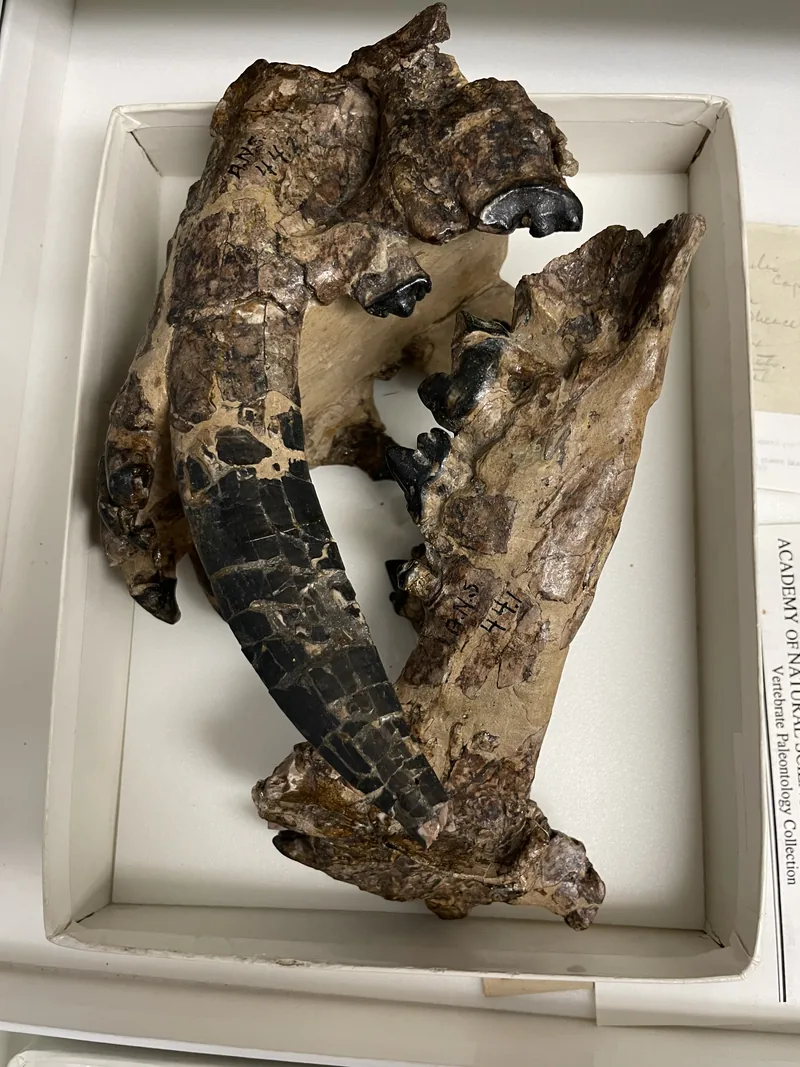
“The oldest Smilodon is called Smilodon gracilis, which lived 2.5 million years ago and was a smaller and less robust species.” A partial skull on this page, ANSP 44.1, was unearthed from Port Kennedy Cave and is deposited at the Academy of Natural Sciences of Philadelphia. Official wording about the oldest species is not used here as a date for that particular specimen beyond what the file states.[source]
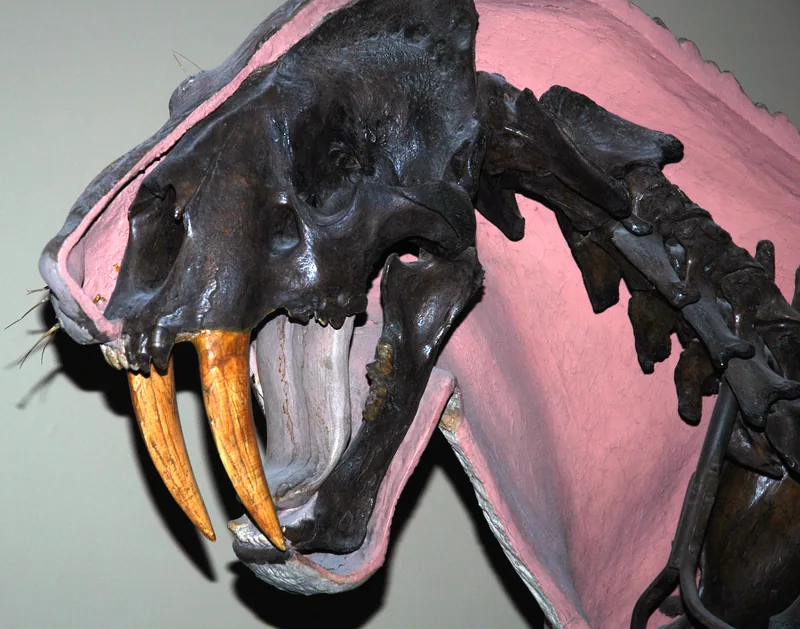
“After crossing the Isthmus of Panama roughly 2 million years ago, Smilodon evolved into two separate species: The North American Smilodon fatalis, and the larger South American Smilodon populator.” “The first Smilodon fatalis fossils from North America were discovered from a cave in Texas and were named by American Paleontologist Joseph Leidy in 1869.”[source]
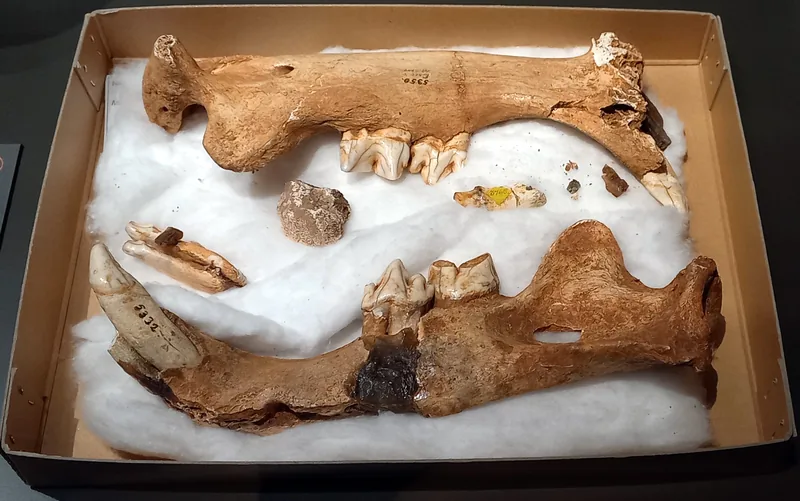
“The first Smilodon fossils were discovered in the 1830’s in Brazil and were named Smilodon populator by Danish naturalist Peter Wilhem Lund in 1842.” Official NPS spelling of “Wilhem” is kept as written. A mandible on this site was collected by Peter W. Lund in Brazil in 1845, according to its file; that collection date stays with the file, beside the official 1842 naming.[source]
“Both the North and South American species of Smilodon went extinct roughly 10,000 years ago.” A Natural History Museum page, writing of Smilodon as a whole, says it “lived in the Americas during the Pleistocene between 2.5 million and 12,000 years ago.” Those two official endings are kept as written.[source][source]
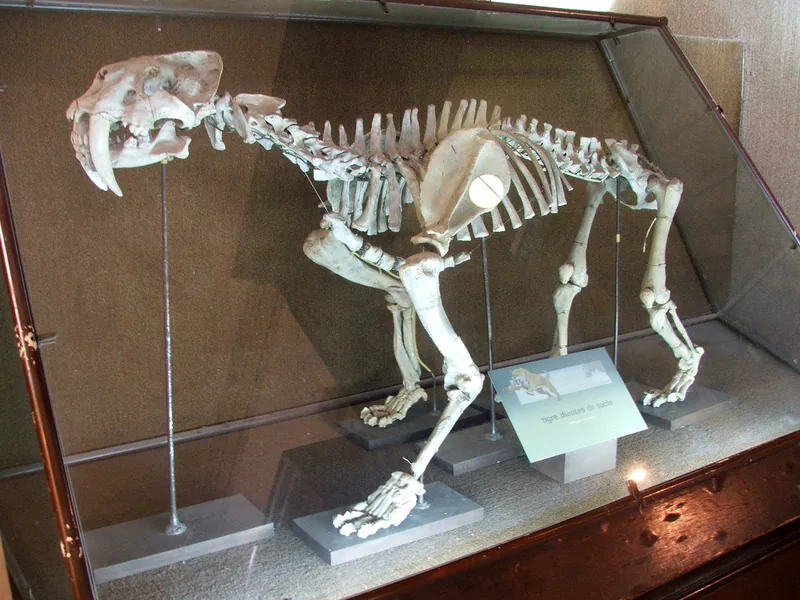
A Nebraska mount on this site is named, on its file, Smilodon californicus (Bovard, 1907), a historic name. This site does not silently relabel that mount S. fatalis. A Paris skeleton is captioned only as Smilodon, because its file does not name a species.[source]
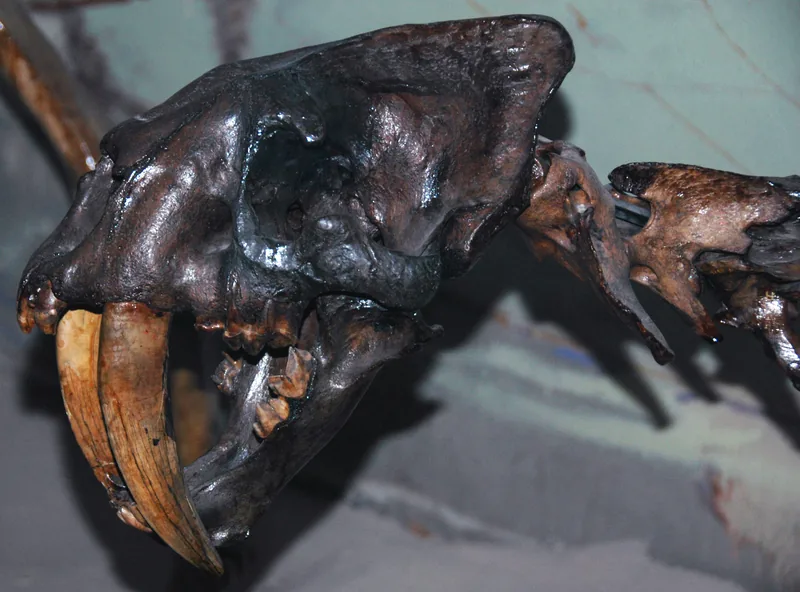
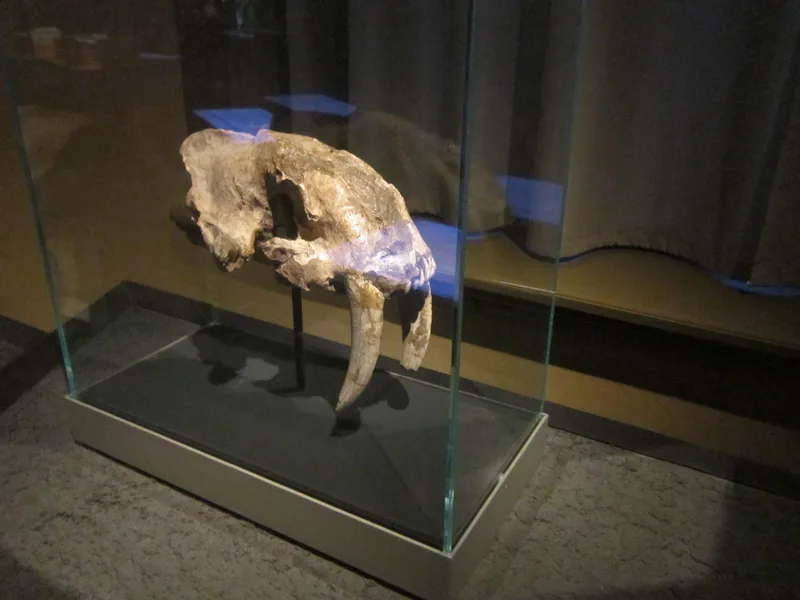
Official wording about diet stays equally careful. “Smilodon was a carnivore that hunted large mammals.” Isotopic analysis, the official page says, suggests “a prey preference of ruminant grazers such as bison and camels (both common at Tule Springs) as well as forest dwelling browsers such as deer and tapirs.” That is official wording about preference, not a menu written on a particular skeleton.[source]
Enjoyed this sabre-tooth desk?
No pop-ups. No intrusive advertising. Just interesting stuff. A little support helps the next fossils.im site get built.