The canines
Eleven inches, and 28 centimetres, kept apart
“The sabertooth cat, or Smilodon fatalis, was named for its nearly foot-long canines.” Its scientific name, official wording says, means “fate scalpel tooth,” “referring to the elongated blade-like upper canines that could reach 11 inches in length.”[source]
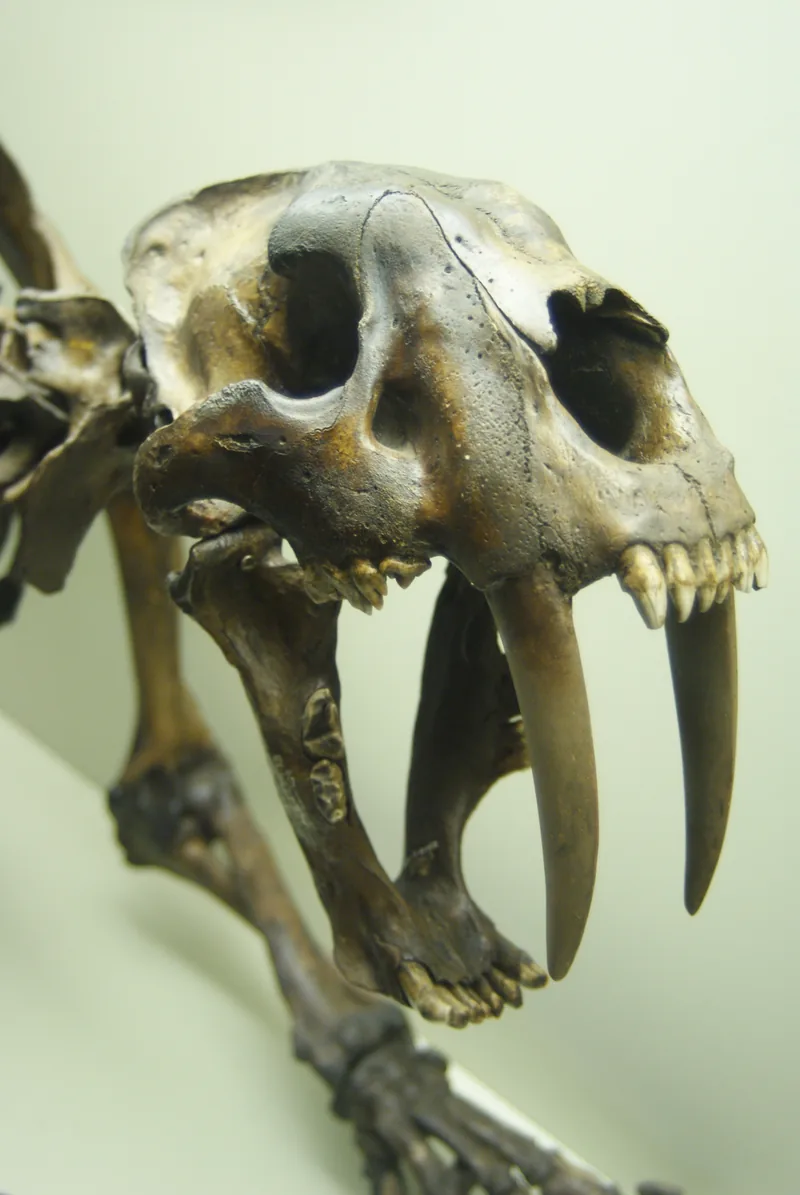
A Natural History Museum page gives another official measurement, and a method. “Smilodon is perhaps the most famous sabre-tooth of them all,” and “it used its large canine teeth, measuring as long as 28 centimetres, to kill prey using a unique motion of the head in combinations with its powerful forelimbs.” That 28-centimetre figure is not tied to a named species on the page. This site does not present it as the NPS 11-inch measurement for S. fatalis, even though the two lengths convert similarly. Each figure stays with its source.[source][source]
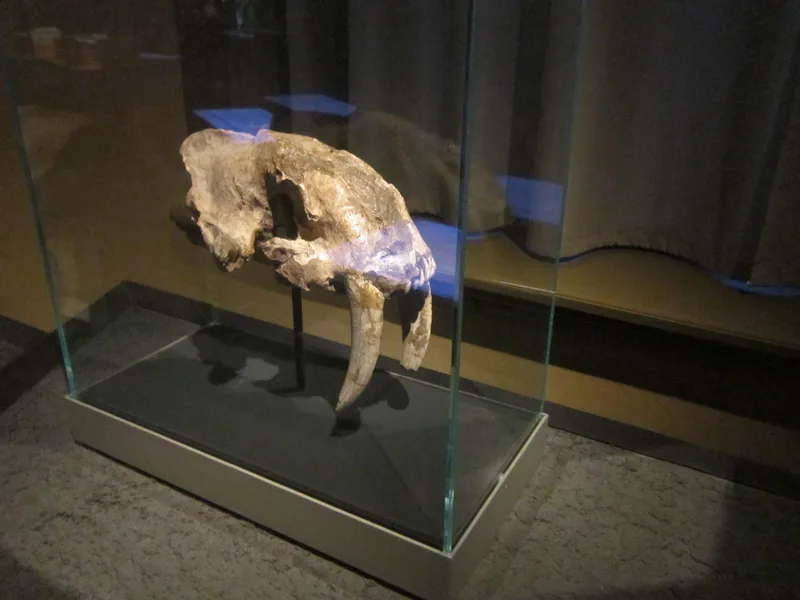
Official NPS wording also describes the body around those teeth. S. fatalis reached “over 3 feet tall at the shoulder, with a body length of nearly 6 feet, and weighing between 350-620 lbs.” It was “the second largest extinct cat at Tule Springs.” “The forearm bones of the saber-toothed cat are more robust than most other large cats, suggesting they bore powerful muscles for grasping and restraining prey.” “It also had a shortened tail, much like the living bobcat.”[source]
The canines themselves took time. “Juvenile saber-toothed cats were born with robust builds, similar to adults, and their saber-like canine teeth started to develop around 12 to 19 months in age, and fully formed by 3 years of age, which is a longer growth period compared to modern big cats.”[source]
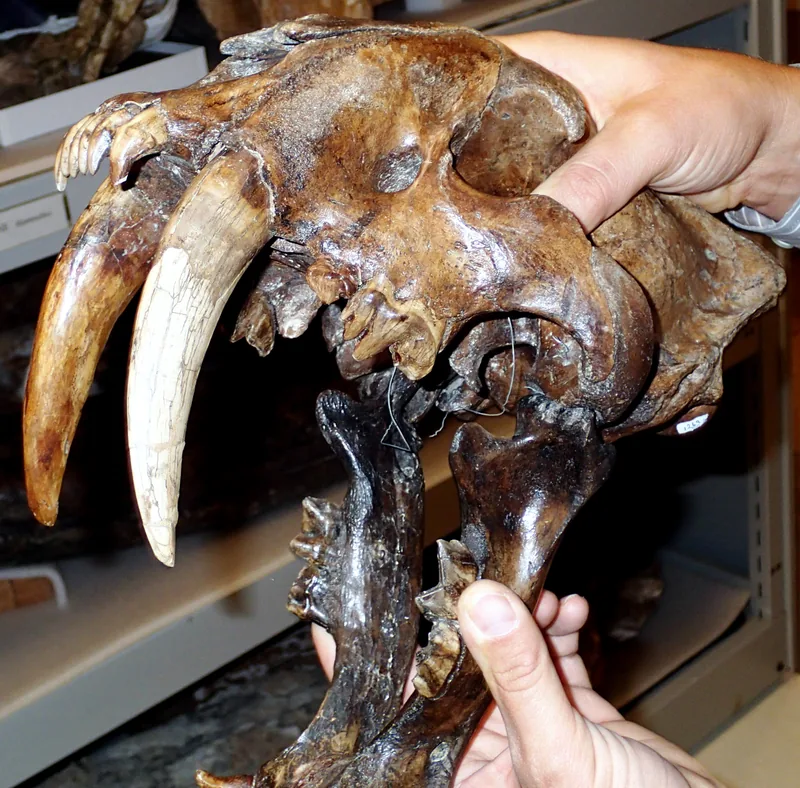
Official wording also gives the teeth a method. “The anatomy of the saber-toothed cat suggests it was an ambush predator and had a relatively good jumping ability.” A Natural History Museum page, not naming a species in that sentence, says Smilodon used those canines “to kill prey using a unique motion of the head in combinations with its powerful forelimbs.” The two official sentences are kept side by side.[source][source]
“The hyoid bones in the throat of the saber-toothed cat suggest it could communicate by roaring like modern big cats.” That official wording is a suggestion from the bones, not a recording.[source]
Juvenile saber-toothed cats, official wording says, “were born with robust builds, similar to adults,” before those long canines began to come through.[source]
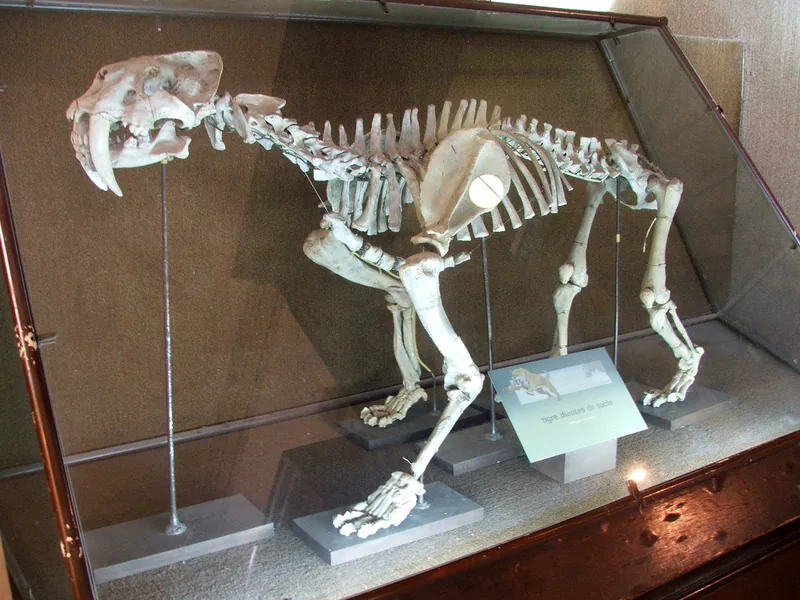
Skull photographs on this site are captioned from their files. None of them is given an official 11-inch or 28-centimetre measurement unless the file itself states one. The official figures stay with the official sentences.[source]
Enjoyed this sabre-tooth desk?
No pop-ups. No intrusive advertising. Just interesting stuff. A little support helps the next fossils.im site get built.