Explore fossils.im

Rancho La Brea

Thousands of fossils, and a state fossil

“Thousands of Smilodon fatalis fossils have been collected from Rancho La Brea in Los Angeles, California and thus is the California state fossil.”[source]
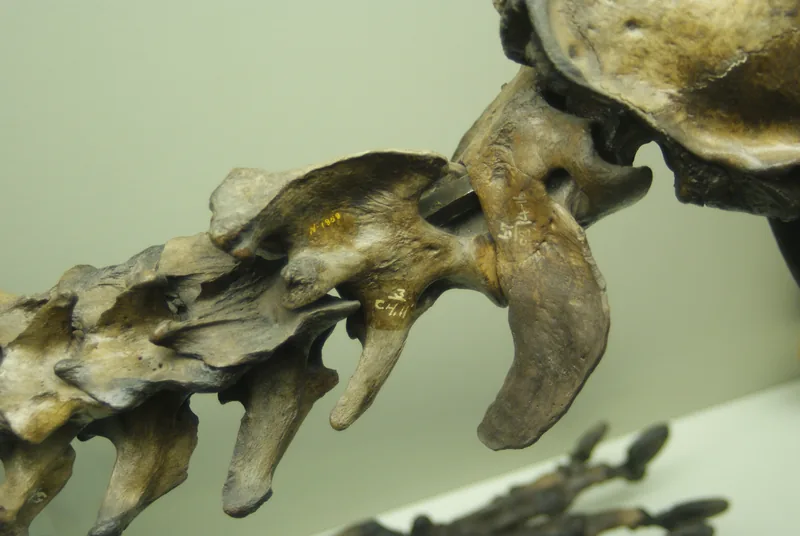
A reconstructed Smilodon standing in a museum hall at the La Brea Tar Pits
A Smilodon mount at the Page Museum at the La Brea Tar Pits, photographed by Dallas Krentzel on 25 February 2012. The file names it Smilodon, without a species. Official wording says thousands of Smilodon fatalis fossils have been collected from Rancho La Brea, and that it is the California state fossil; that official wording is not used here as a species label for this particular mount. Licensed CC BY 2.0. Photo: Dallas Krentzel, 25 February 2012 · CC BY 2.0 · Wikimedia Commons

That official sentence is about the Rancho La Brea collection of S. fatalis. Photographs on this page are captioned from their files. A Page Museum mount is labelled Smilodon, without a species. A Denver skull is Smilodon sp., from Rancho La Brea. Carnegie Museum specimen CM 10197 is a mounted S. fatalis skeleton from those pits. A Nebraska mount, also from Rancho La Brea, carries the historic file name Smilodon californicus.[source]
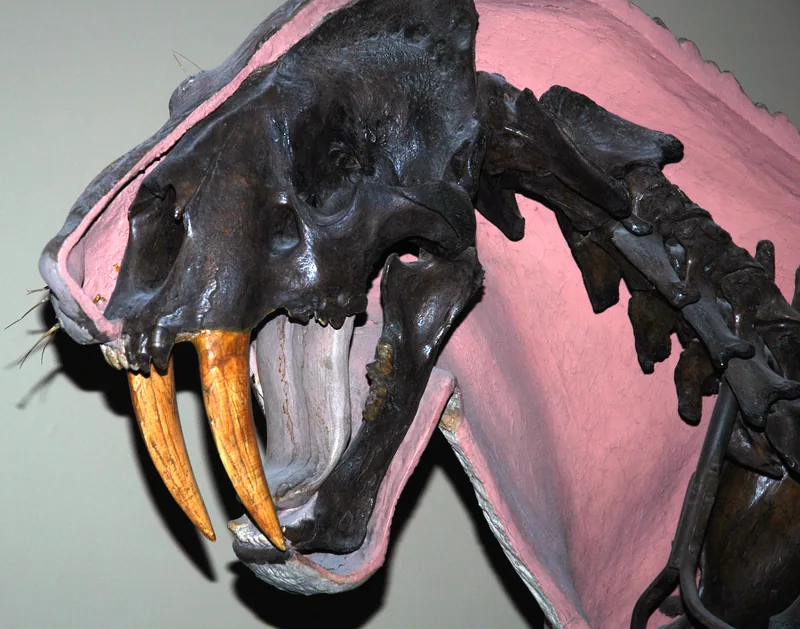
A mounted Smilodon fatalis skeleton in a museum display, from Rancho La Brea
A mounted skeleton of Smilodon fatalis, Carnegie Museum of Natural History specimen CM 10197, from Rancho La Brea, Los Angeles, photographed by James St. John on 21 July 2006. The file uses the popular name “saber-toothed tiger”; official National Park Service wording says Smilodon is not directly related to tigers, and that popular name is not used here as our name for the animal. Licensed CC BY 2.0. Photo: James St. John, 21 July 2006 · CC BY 2.0 · Wikimedia Commons

Official wording also gives the cat a range far beyond Los Angeles. “Fossils of Smilodon fatalis have been found as far north as Alberta, Canada and as far south as parts of northwestern South America.” “Fossils also suggested that Smilodon occurred on both the Atlantic and Pacific coasts.” A Royal Alberta Museum still of S. fatalis sits beside that northern official wording, and is not treated as a Tule Springs or La Brea specimen.[source]
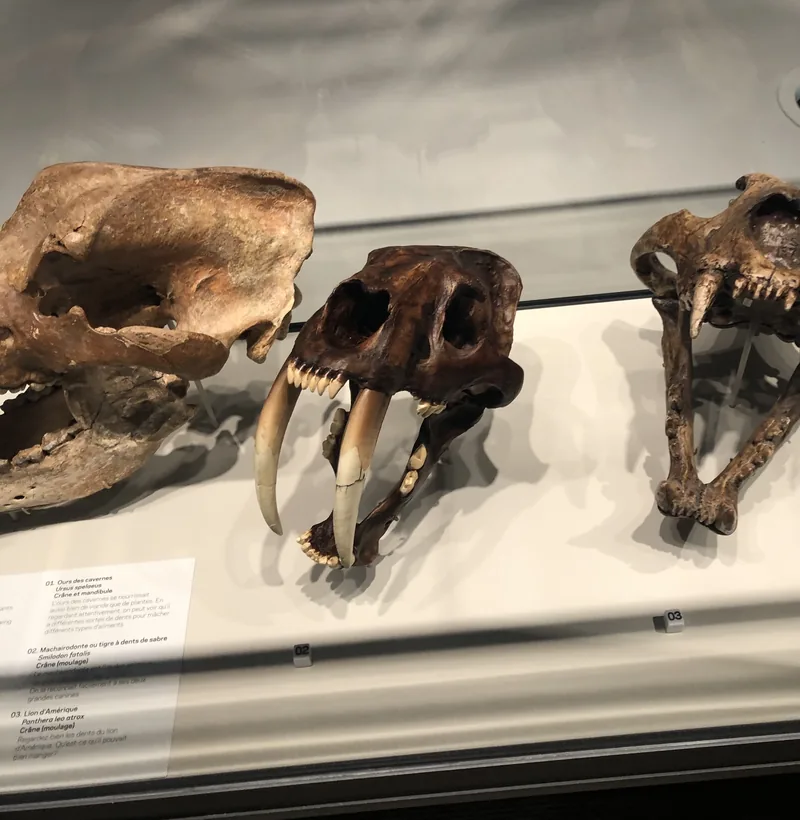
A Smilodon fatalis mount in a tall glass case at the Royal Alberta Museum
Smilodon fatalis at the Royal Alberta Museum, photographed by Qwexcxewq on 17 December 2022. Official National Park Service wording says fossils of S. fatalis have been found as far north as Alberta, Canada. Licensed CC BY 4.0. Photo: Qwexcxewq, 17 December 2022 · CC BY 4.0 · Wikimedia Commons

“It has been previously suggested that Smilodon may have preferred open to mixed woodlands because it was rarely found in areas of open habitats such as grasslands.” At Tule Springs, official isotopic wording suggests a prey preference for ruminant grazers such as bison and camels, “both common at Tule Springs,” as well as forest browsers such as deer and tapirs.[source]
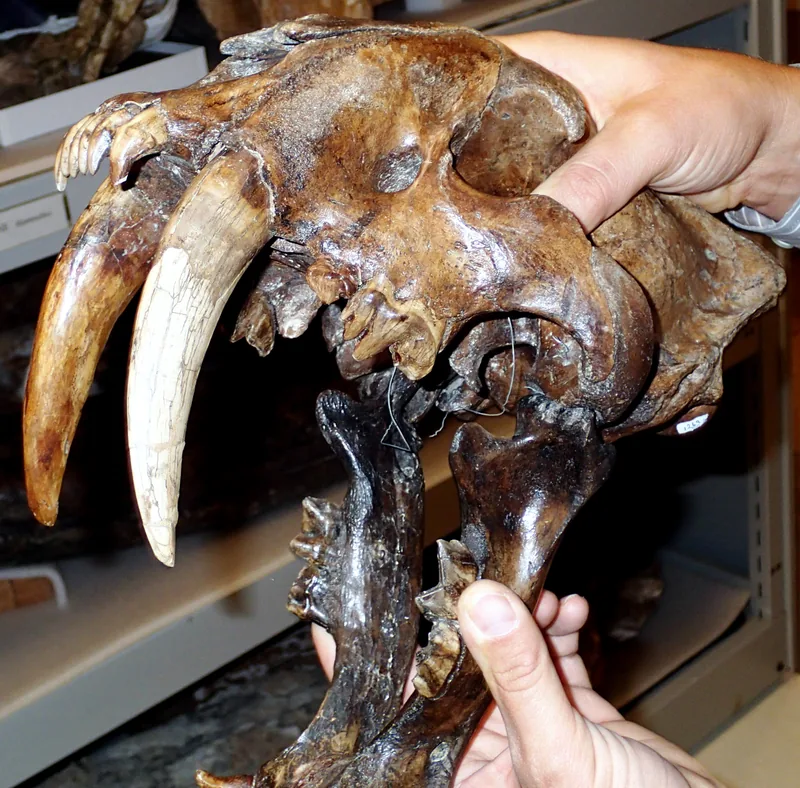
A real Smilodon skull from Rancho La Brea, in the Denver Museum of Nature and Science
A real Smilodon skull from the Pleistocene of California, on display at the Denver Museum of Nature & Science, photographed by James St. John on 26 October 2013. The file identifies it as Smilodon sp., from Rancho La Brea. The file also uses the popular name “saber-toothed tiger,” which is not used here as our name for the animal. Licensed CC BY 2.0. Photo: James St. John, 26 October 2013 · CC BY 2.0 · Wikimedia Commons

Several Smilodon fossils, official wording says, “exhibit healed injuries, which have led some paleontologist to suggest that they had some form of social structure that shared resources.” Those groups “could have been similar to African lion prides or perhaps monogamous pairs with offspring.” The suggestion is kept as a suggestion.[source]

Keep the lights on

Enjoyed this sabre-tooth desk?

No pop-ups. No intrusive advertising. Just interesting stuff. A little support helps the next fossils.im site get built.