Credits
Every photograph on this site
Licences were checked on each source page on 18 November 2026. CC BY 4.0 stills are used on the website and credited; they are not placed in the typographic PDFs. CC BY-SA images, if any appear, are used on the website only, and are not placed in the downloadable fact sheets.
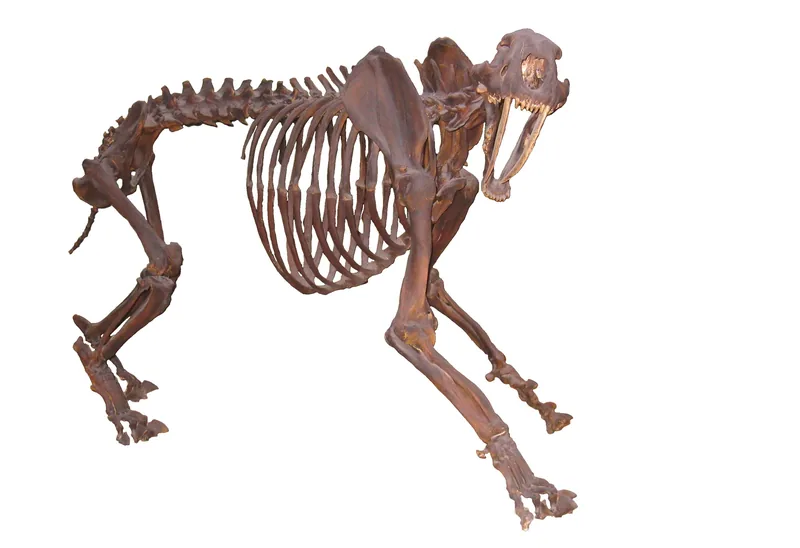
A fossil of Smilodon fatalis in the Utah Museum of Natural History, Salt Lake City (now the Natural History Museum of Utah), photographed by Daderot on 16 November 2009. This is a fossil, not a living animal. Public domain. Photo: Daderot, 16 November 2009 · Public domain · Wikimedia Commons 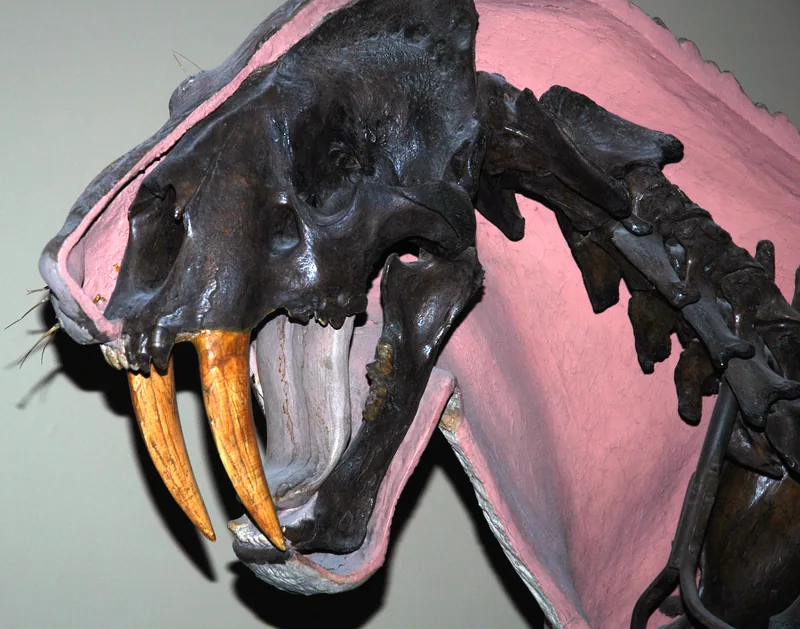
A mounted skeleton of Smilodon fatalis, Carnegie Museum of Natural History specimen CM 10197, from Rancho La Brea, Los Angeles, photographed by James St. John on 21 July 2006. The file uses the popular name “saber-toothed tiger”; official National Park Service wording says Smilodon is not directly related to tigers, and that popular name is not used here as our name for the animal. Licensed CC BY 2.0. Photo: James St. John, 21 July 2006 · CC BY 2.0 · Wikimedia Commons 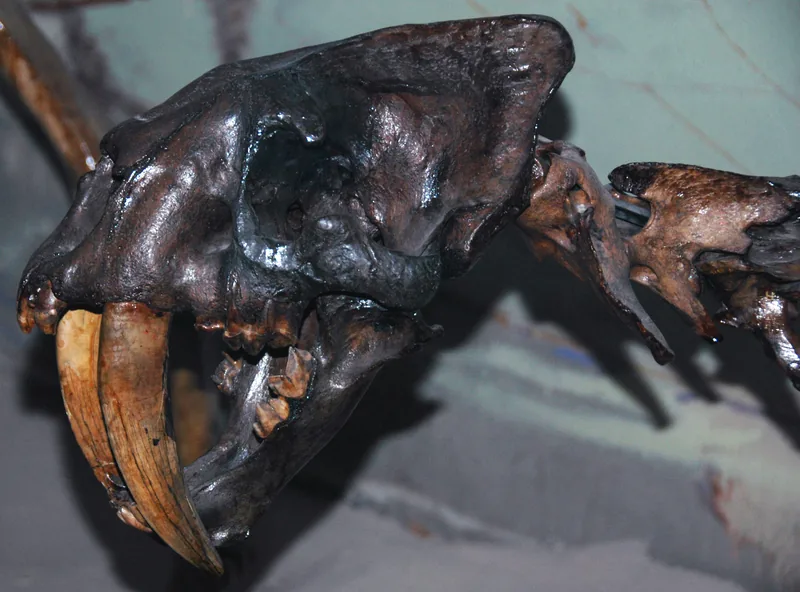
A real skeleton from Rancho La Brea on display at the Nebraska State Museum of Natural History, Lincoln, photographed by James St. John on 17 July 2011. The file and historic name is Smilodon californicus (Bovard, 1907). This site does not silently relabel the mount Smilodon fatalis. Licensed CC BY 2.0. Photo: James St. John, 17 July 2011 · CC BY 2.0 · Wikimedia Commons 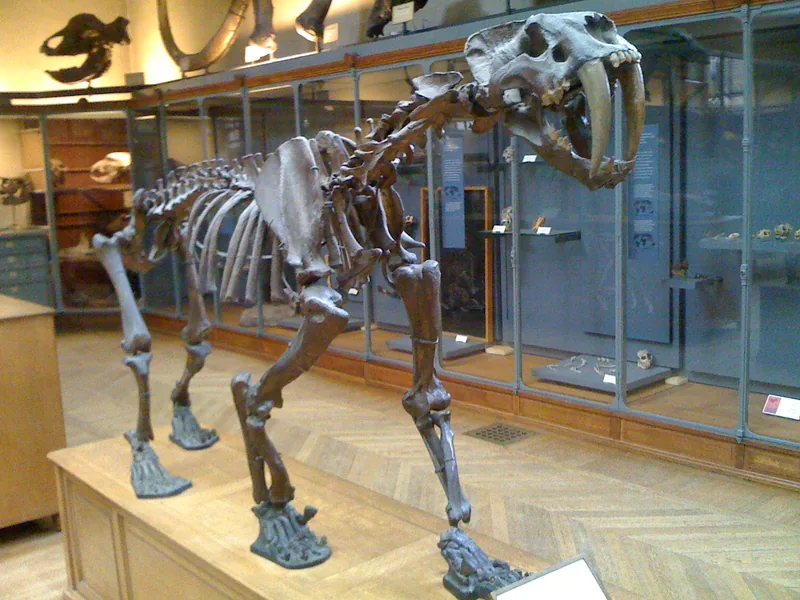
A fossil skeleton of Smilodon on display at the Muséum national d’Histoire naturelle, Paris, photographed by Clstaudt on 18 October 2010. The file does not name the species, and this site does not invent one. Licensed CC0. Photo: Clstaudt, 18 October 2010 · CC0 · Wikimedia Commons 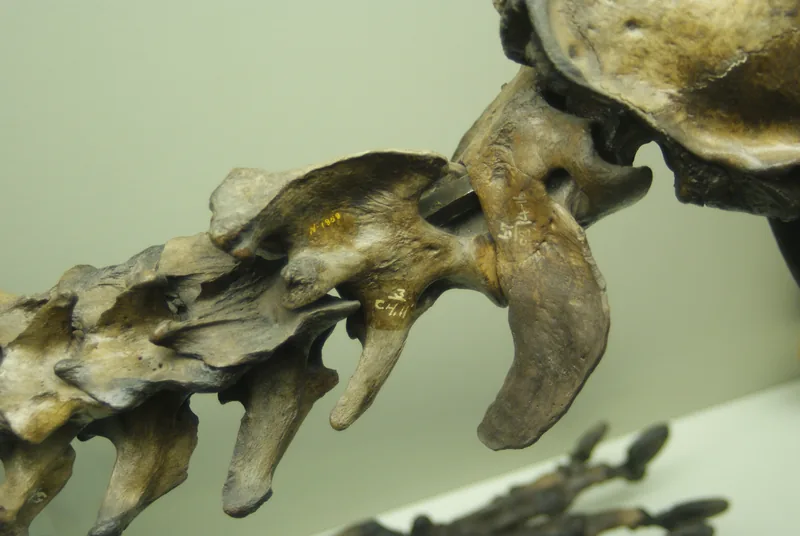
A Smilodon mount at the Page Museum at the La Brea Tar Pits, photographed by Dallas Krentzel on 25 February 2012. The file names it Smilodon, without a species. Official wording says thousands of Smilodon fatalis fossils have been collected from Rancho La Brea, and that it is the California state fossil; that official wording is not used here as a species label for this particular mount. Licensed CC BY 2.0. Photo: Dallas Krentzel, 25 February 2012 · CC BY 2.0 · Wikimedia Commons 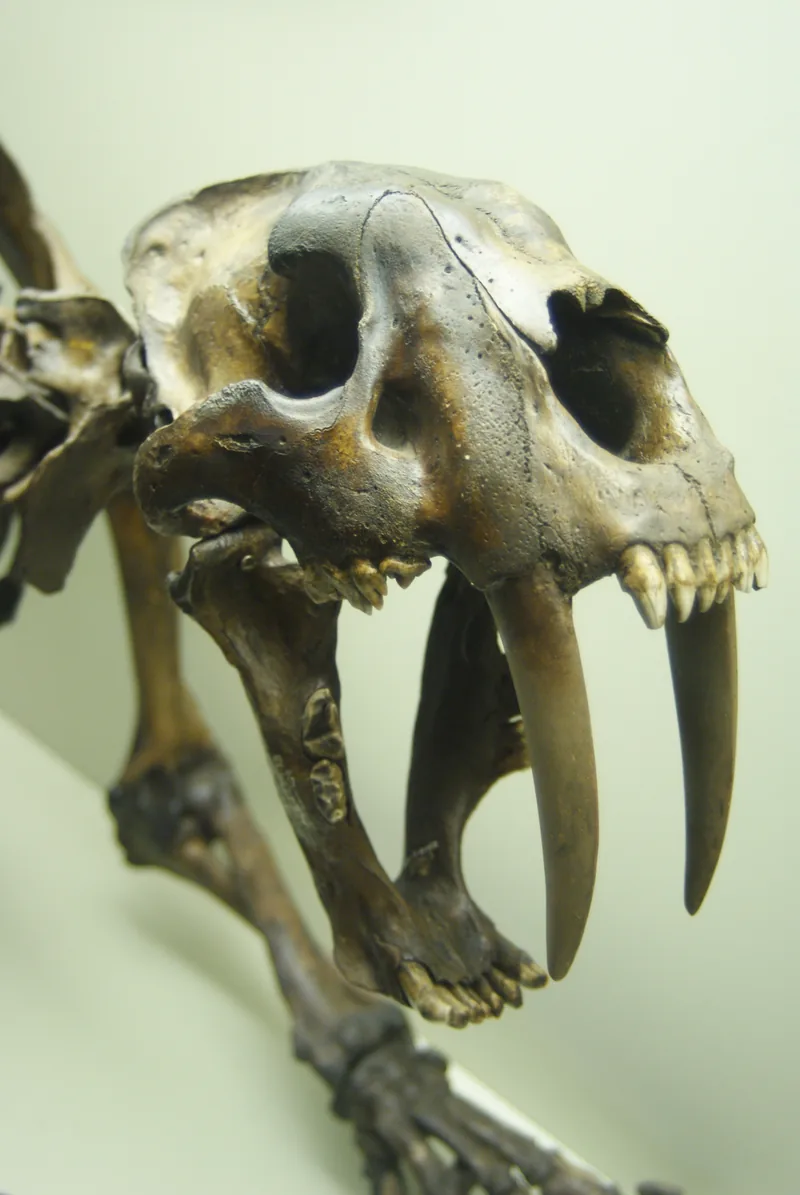
A Smilodon skull at the Page Museum at the La Brea Tar Pits, photographed by Dallas Krentzel on 25 February 2012. The file does not name a species, and this site does not invent one. Licensed CC BY 2.0. Photo: Dallas Krentzel, 25 February 2012 · CC BY 2.0 · Wikimedia Commons 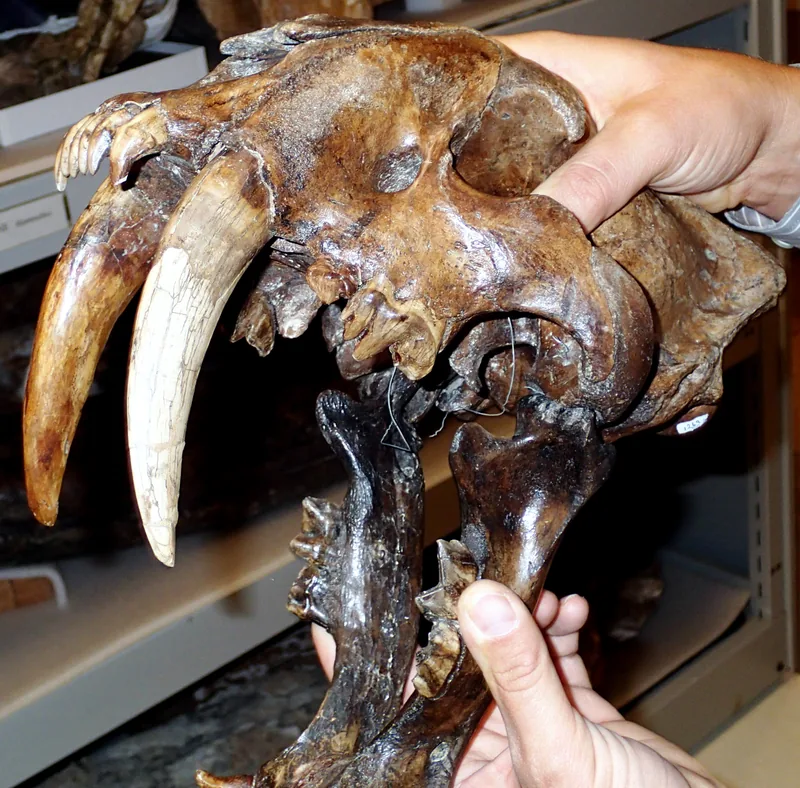
A real Smilodon skull from the Pleistocene of California, on display at the Denver Museum of Nature & Science, photographed by James St. John on 26 October 2013. The file identifies it as Smilodon sp., from Rancho La Brea. The file also uses the popular name “saber-toothed tiger,” which is not used here as our name for the animal. Licensed CC BY 2.0. Photo: James St. John, 26 October 2013 · CC BY 2.0 · Wikimedia Commons 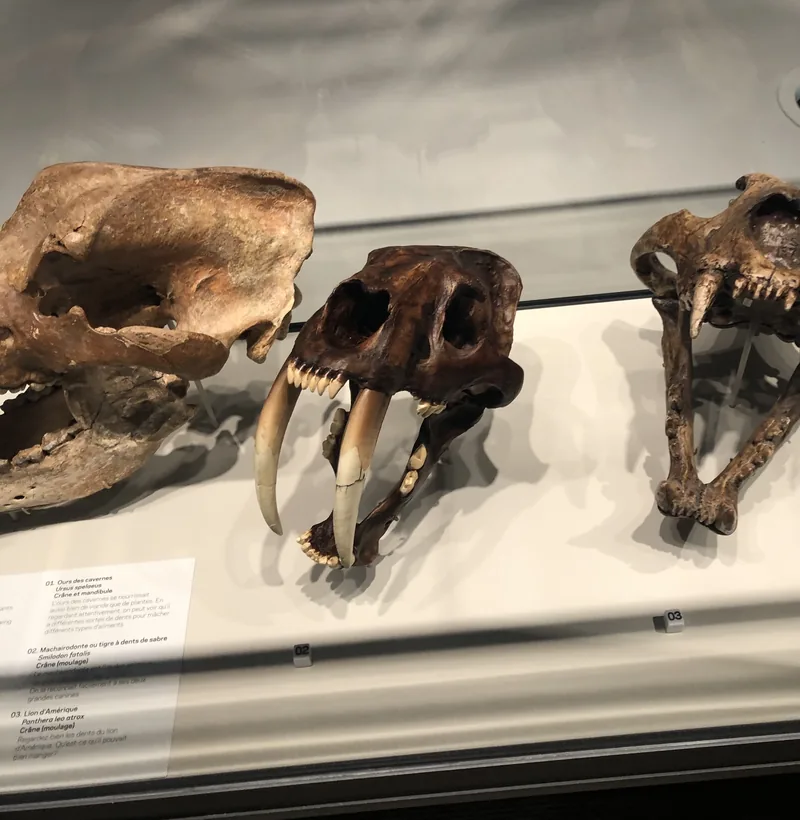
Smilodon fatalis at the Royal Alberta Museum, photographed by Qwexcxewq on 17 December 2022. Official National Park Service wording says fossils of S. fatalis have been found as far north as Alberta, Canada. Licensed CC BY 4.0. Photo: Qwexcxewq, 17 December 2022 · CC BY 4.0 · Wikimedia Commons 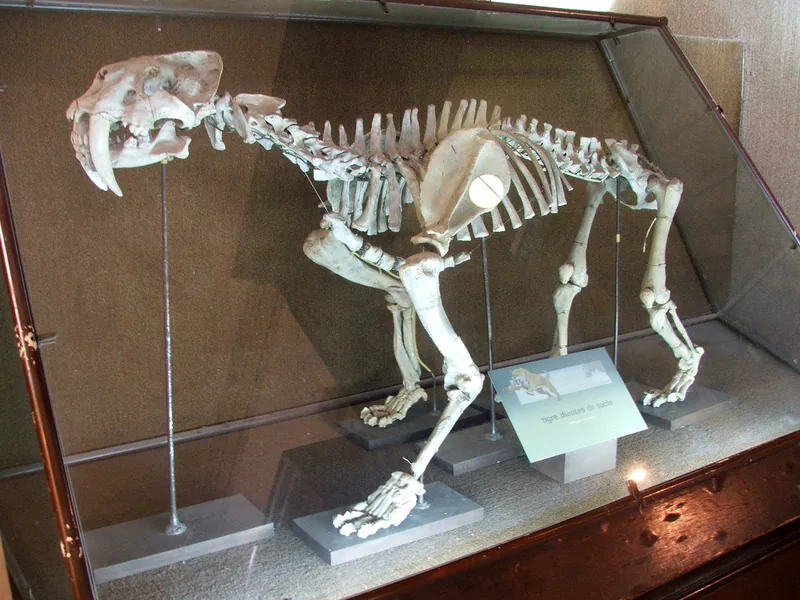
Smilodon populator at the Museo de La Plata, Argentina, photographed by AleArgento on 23 January 2009. Official wording names S. populator as the larger South American species, first named by Peter Wilhem Lund in 1842. Licensed CC BY 3.0. Photo: AleArgento, 23 January 2009 · CC BY 3.0 · Wikimedia Commons 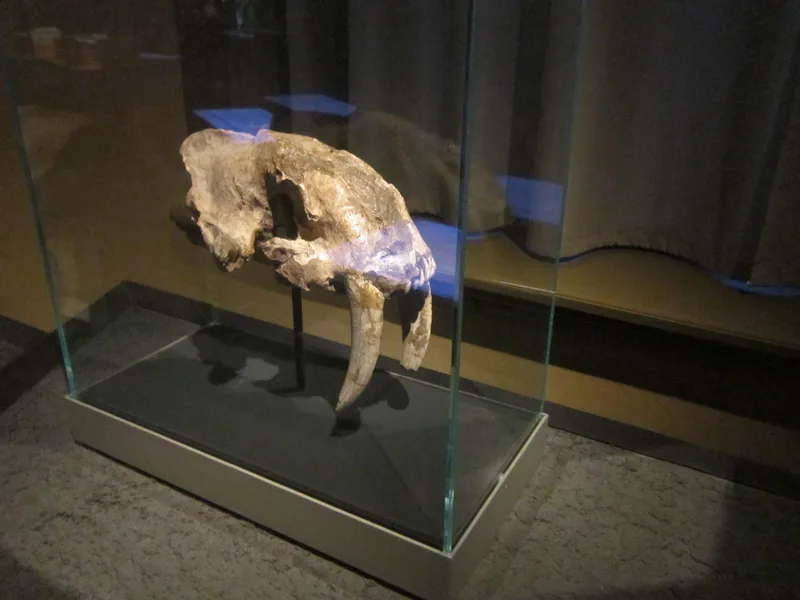
A skull of Smilodon populator, photographed by Interfase on 26 April 2013 in Berlin. Public domain. Photo: Interfase, 26 April 2013 · Public domain · Wikimedia Commons 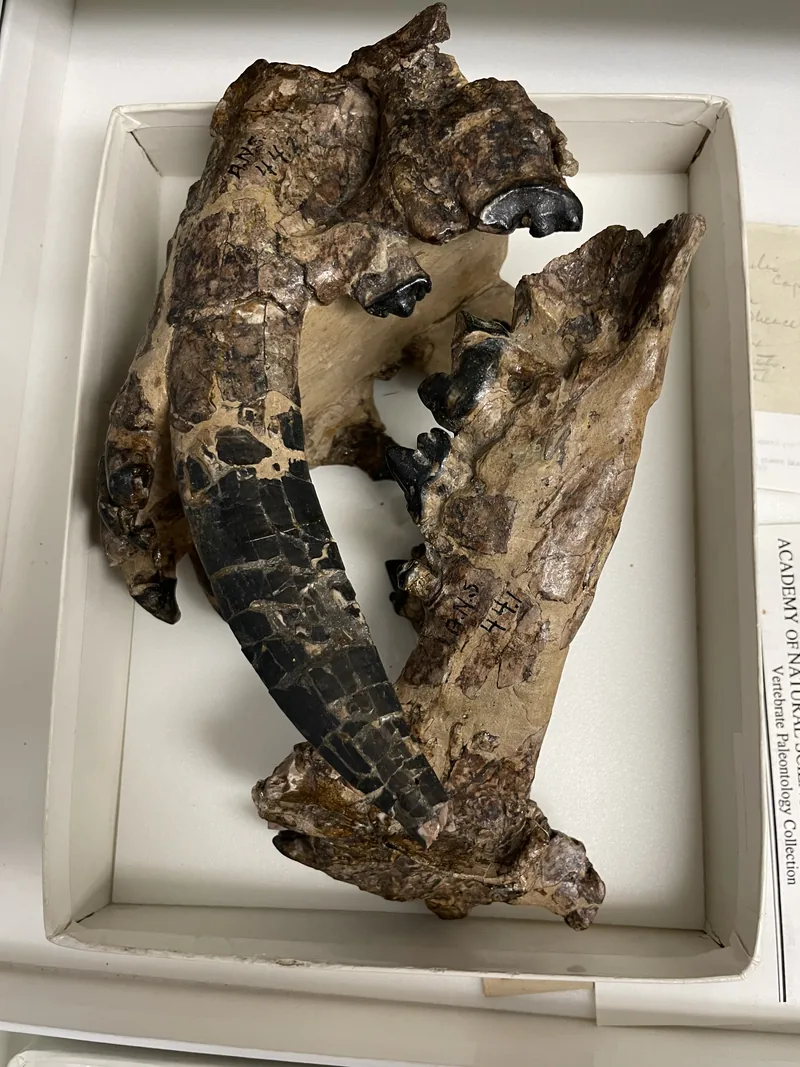
A partial Smilodon gracilis skull, specimen ANSP 44.1, unearthed from Port Kennedy Cave and deposited at the Academy of Natural Sciences of Philadelphia, photographed by Augustios Paleo on 27 February 2023. Official wording calls S. gracilis the oldest species, which lived 2.5 million years ago and was smaller and less robust. Licensed CC BY-SA 4.0; used on the website only. Photo: Augustios Paleo, 27 February 2023 · CC BY-SA 4.0 · Wikimedia Commons 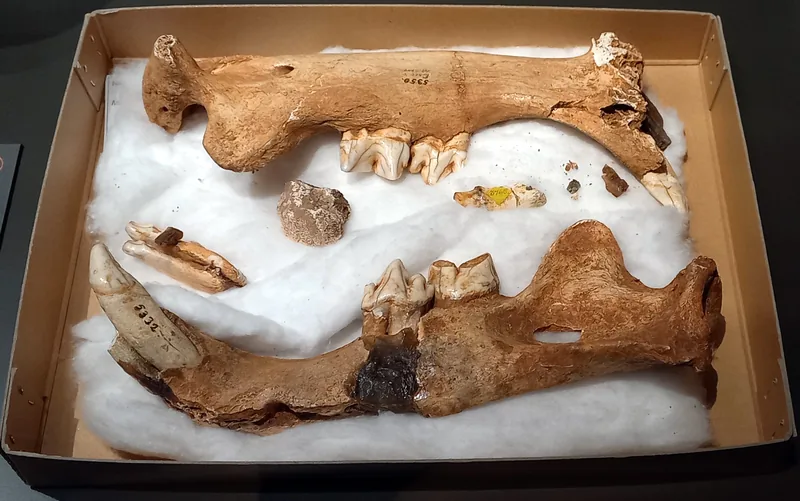
A Smilodon populator mandible collected by Peter W. Lund in Brazil in 1845, at the Natural History Museum of Denmark, Copenhagen, photographed by FunkMonk on 14 October 2024. Official National Park Service wording says the species was named by Peter Wilhem Lund in 1842; the 1845 collection date stays with this file. Licensed CC BY-SA 4.0; used on the website only. Photo: FunkMonk, 14 October 2024 · CC BY-SA 4.0 · Wikimedia Commons
Enjoyed this sabre-tooth desk?
No pop-ups. No intrusive advertising. Just interesting stuff. A little support helps the next fossils.im site get built.