smilodon.fossils.im
A famous cat that is not a tiger
“Though sometimes called a “saber-toothed tiger”, Smilodon is not directly related to tigers or other pantherine cats such as lions, leopards, and jaguars.” Official wording gives it another name instead: Smilodon fatalis, “fate scalpel tooth.”[source]
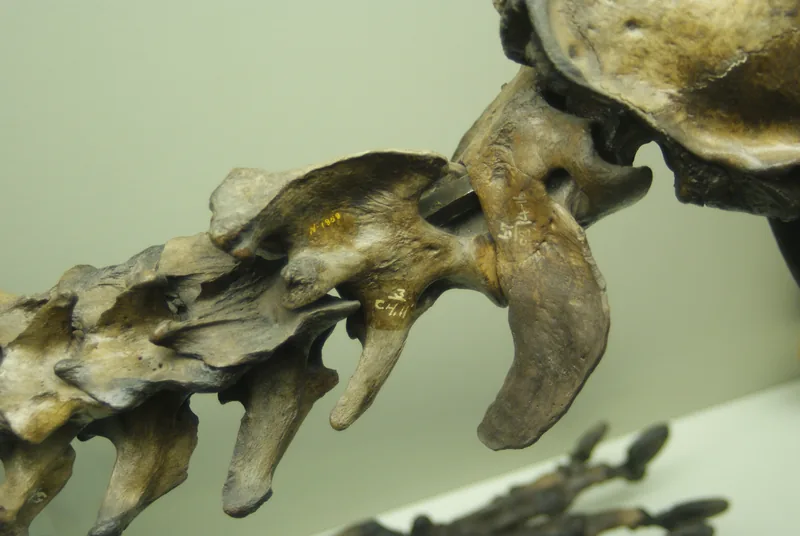
A famous cat that is not a tiger
Pick a story. Official pages treat Smilodon as a real sabre-toothed cat — famous, often misnamed, and carefully measured — and they do not all use the same figures.
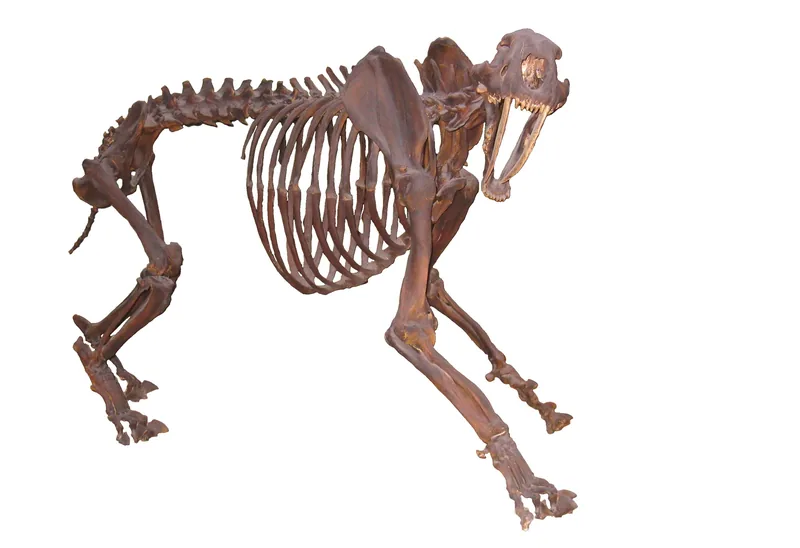
The canines are the famous part, and official pages measure them more than once. A National Park Service page says the blade-like upper canines of S. fatalis “could reach 11 inches in length.” A Natural History Museum page, without naming a species in that sentence, says Smilodon used “large canine teeth, measuring as long as 28 centimetres.” This desk keeps both figures with their sources, rather than treating them as one measurement.[source][source]
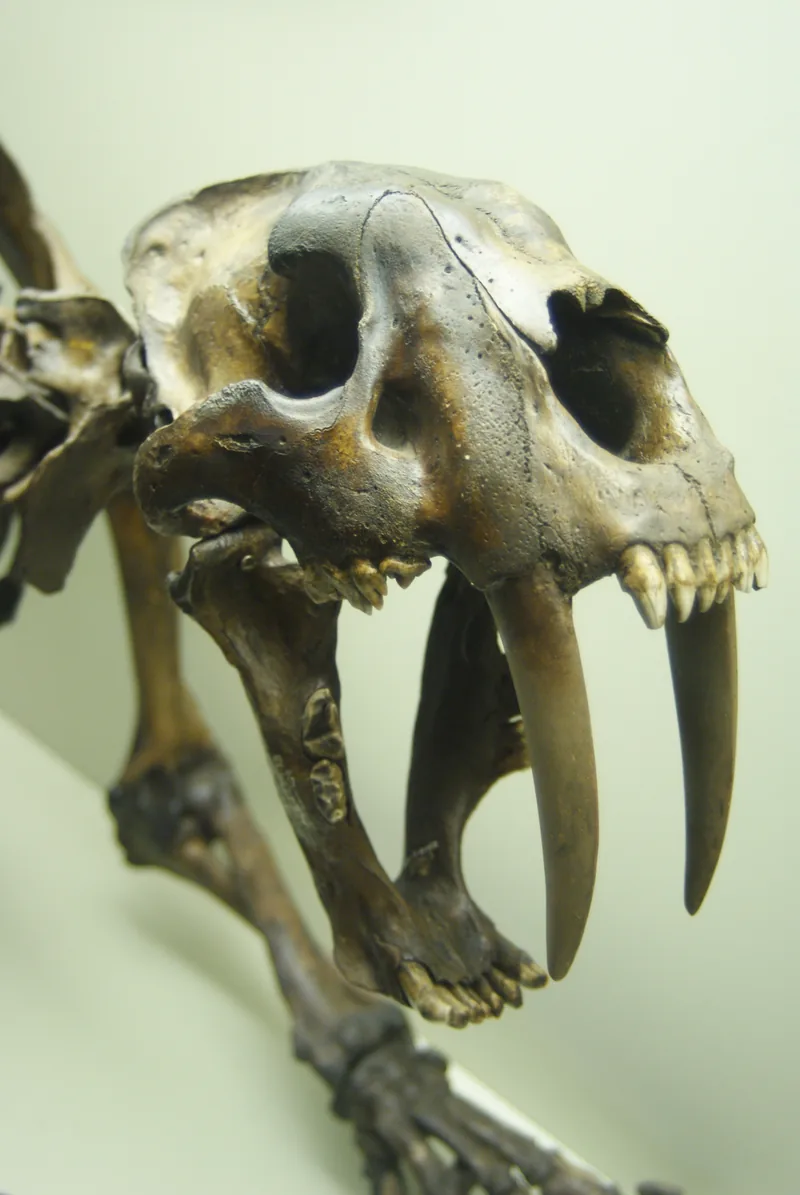
Then come the species. Official wording starts in Brazil in the 1830s, with Smilodon populator named by Peter Wilhem Lund in 1842; moves to a Texas cave and Joseph Leidy’s S. fatalis in 1869; and remembers an older, slighter cat, S. gracilis, at 2.5 million years ago. Thousands of S. fatalis fossils from Rancho La Brea made it the California state fossil. Two official endings are kept as written: “roughly 10,000 years ago,” and a range that ends “12,000 years ago.”[source][source]
Official wording also gives the cat a method, and a voice, both carefully. “The anatomy of the saber-toothed cat suggests it was an ambush predator and had a relatively good jumping ability.” “The hyoid bones in the throat of the saber-toothed cat suggest it could communicate by roaring like modern big cats.” A Natural History Museum page, writing of a unique motion of the head used with powerful forelimbs, is kept beside those suggestions rather than blended with them. None of that wording is treated here as a film stunt.[source][source]
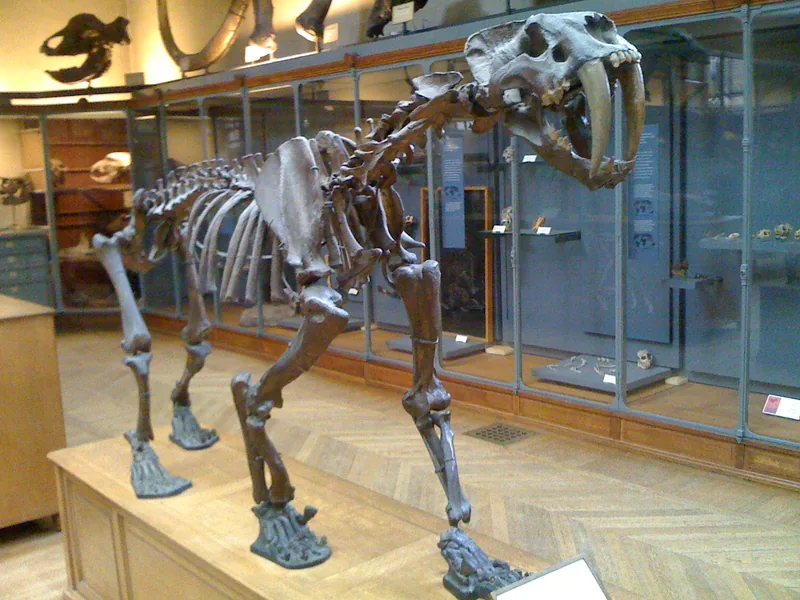
A Paris skeleton on this page is captioned only as Smilodon, because its file does not name a species. Official sentences about S. fatalis sizes and canines stay with those official sentences, not with a mount that the file leaves unnamed.[source]
Enjoyed this sabre-tooth desk?
No pop-ups. No intrusive advertising. Just interesting stuff. A little support helps the next fossils.im site get built.