For families
A famous cat, told carefully
Nothing here needs a login, and nothing jumps out at you. The desk on the home page is a good place to start: pick a story, then follow a link.
A simple path: start with Was it a tiger? Official wording is plain: it was not. Then the canines — a name that means “fate scalpel tooth,” and two official measurements kept apart. Then three species, including an older, slighter cat, and a larger South American one named in 1842. If someone asks about tar pits, Rancho La Brea is the official home of thousands of S. fatalis fossils, and of the California state fossil.[source]
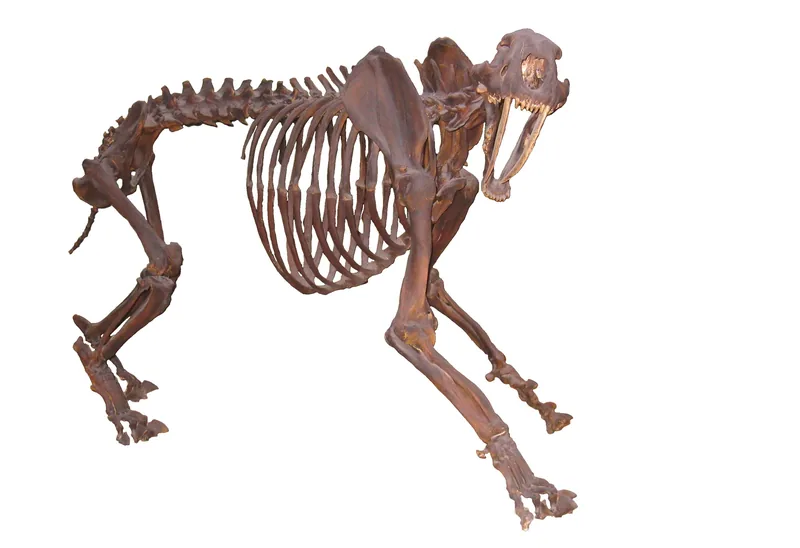
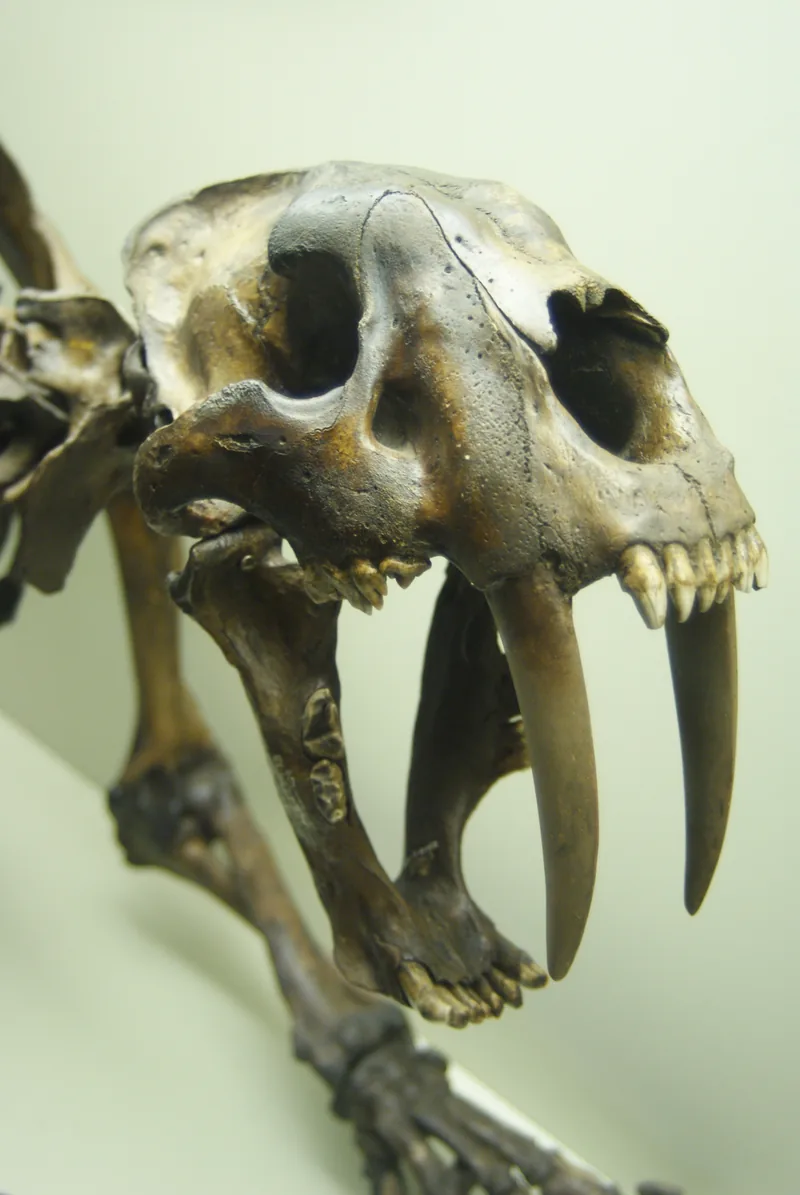
A good official surprise to leave with is how long the canines took to grow: they started at around 12 to 19 months, and were fully formed by 3 years, “a longer growth period compared to modern big cats.” Another is a careful maybe: fossils with healed injuries have led some scientists, in official wording, to suggest a social life that shared resources. That stays a suggestion. A third is a suggestion from the throat: hyoid bones “suggest it could communicate by roaring like modern big cats.”[source]
If the popular name is the thing someone arrived with, stay with official NPS wording: it “is not directly related to tigers.” If they have heard that all sabre-tooths were one family, a Natural History Museum page is equally plain: they “are not a single closely related group of animals.” Earlier still, official wording describes Diegoaelurus vanvalkenburghae, living “over 40 million years before the sabre-tooth tiger,” among the earliest sabre-toothed mammals — a related idea, official wording says, not a younger Smilodon.[source][source]
The quiz has ten questions from those official sentences. The timeline can be read in order. The fact sheets are typographic PDFs, A4 and US Letter, with no photographs inside: was it a tiger?, the official canines, and the three species.
Enjoyed this sabre-tooth desk?
No pop-ups. No intrusive advertising. Just interesting stuff. A little support helps the next fossils.im site get built.