Was it a tiger?
A popular name, and a family tree that says otherwise
A U.S. National Park Service page, last updated 12 October 2021, is careful about a name almost everyone has heard. “Though sometimes called a “saber-toothed tiger”, Smilodon is not directly related to tigers or other pantherine cats such as lions, leopards, and jaguars.”[source]
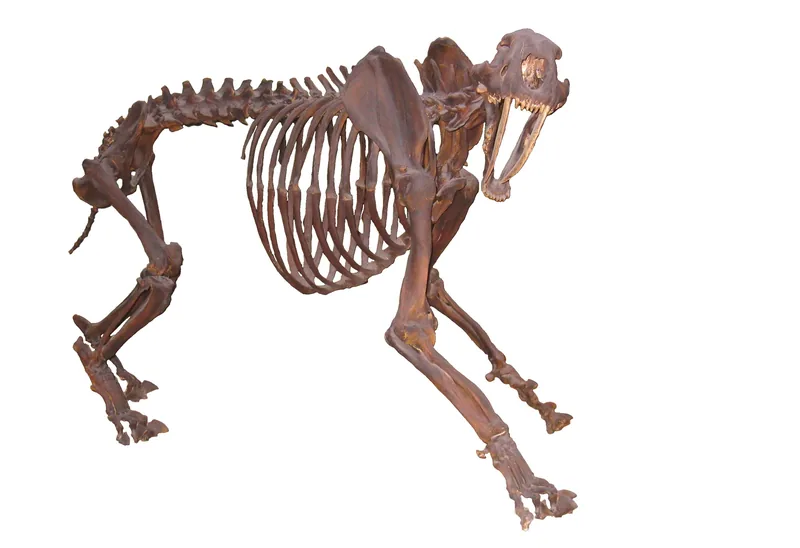
Instead, official wording places it on another branch. “Smilodon was one of the last of the machairodonts, or Machairodontinae, an extinct branch of the cat family tree that evolved elongated saber-like upper canine teeth.” “The other major branch of cats, called the Felinae, include all living cats we see today.” So the living tigers, lions, leopards and jaguars sit on a different official branch from this famous fossil cat.[source]
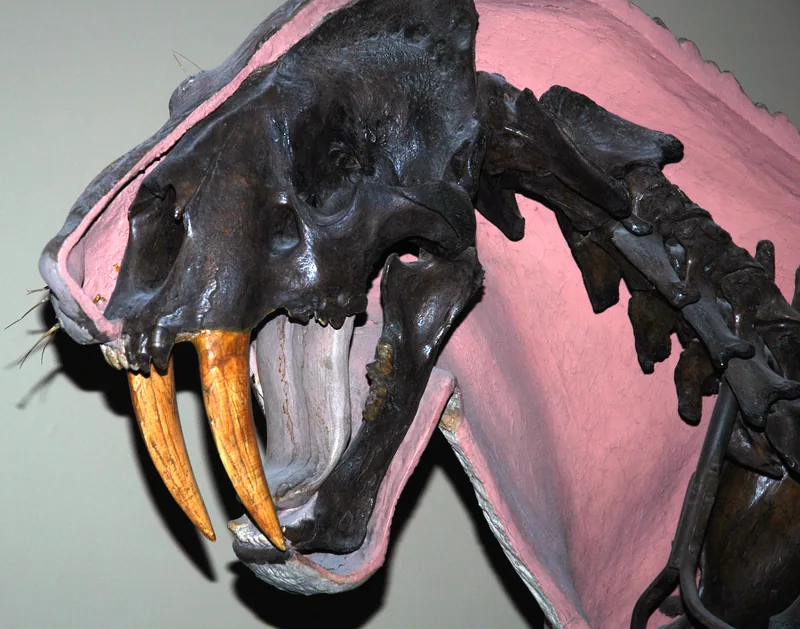
A Natural History Museum page, published 15 March 2022, uses the popular name in a specialist’s list. Dr Jerry Hooker is quoted on “the sabre-tooth form,” which “has evolved multiple times throughout history, including in a South American marsupial called Thylacosmilus, the nimravids, also known as the false sabre-toothed cats, as well as cat relatives such as Smilodon, the sabre-toothed tiger.” That official quotation is kept here as an example of the popular name, not as a correction of the NPS statement that Smilodon is not a tiger.[source]
The same official page is broader still. Sabre-tooth animals “have been made famous through their appearances in exhibitions and films,” but “they’re not a single closely related group of animals.” “The term refers to a number of groups spanning millions of years which all shared a hypercarnivorous lifestyle that saw them eat extremely high amounts of meat.” Smilodon, it says, “is perhaps the most famous sabre-tooth of them all.”[source]
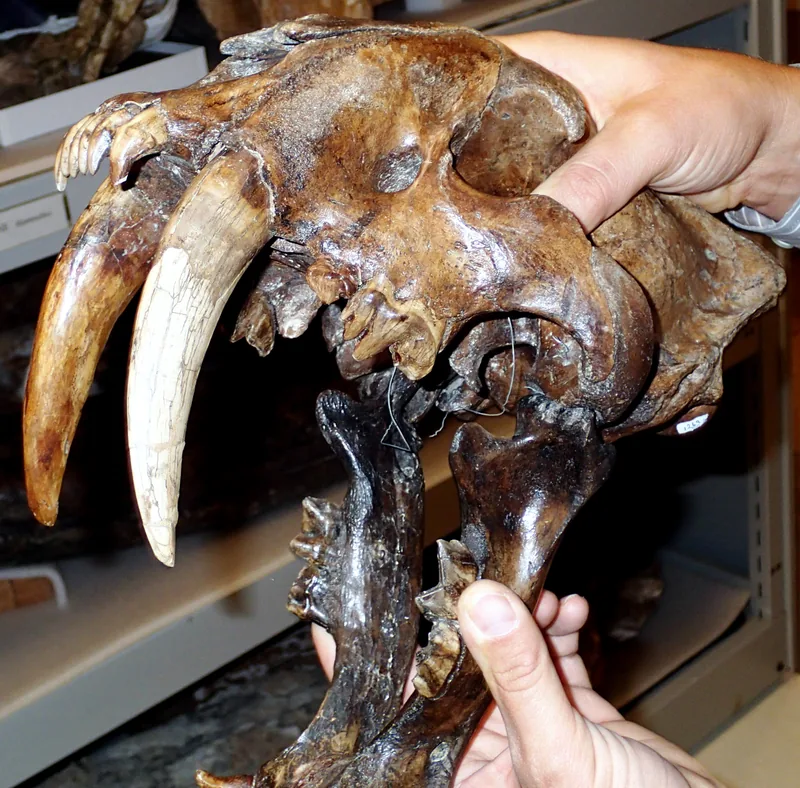
The same official page looks much earlier. Diegoaelurus vanvalkenburghae, it says, is “among the earliest sabre-toothed mammals to evolve,” living “over 40 million years before the sabre-tooth tiger.” Official wording uses that popular name in that sentence; this site does not adopt it as its own name for Smilodon. The animal “may have preyed on rhinos and primates in the forests of California,” official wording says, and “is thought to have hunted on the forest floor and in trees.”[source]
Dr Ashley Poust, a co-author of the species’ description, is quoted: “Today the ability to eat an all-meat diet isn’t uncommon in mammals. Tigers and polar bears, for instance, can both do it. But 42 million years ago, mammals were only just figuring out how to survive on meat alone.” “One big advance was to evolve specialized teeth for slicing flesh, which is something we see in this newly described specimen. Nothing like this had existed in mammals before.” Official wording also says a few mammal ancestors had long fangs, but D. vanvalkenburghae and its few relatives “represent the first cat-like approach to an all-meat diet, with sabre-teeth in front and slicing scissor teeth called carnassials in the back.”[source]
The species was “named after the city of San Diego and sabre-tooth expert Dr Blaire Van Valkenburgh,” and the description “was published in the journal PeerJ.” It is “a member of a group of mammals known as machaeroidines, which while looking similar to cats, are not closely related to them.” “Instead, this group of animals branched off from all living carnivores over 50 million years ago, and subsequently went extinct.” Official wording places that earlier sabre-tooth idea beside Smilodon, not inside Smilodon’s family tree.[source]
Photograph files on this site sometimes use the popular name “saber-toothed tiger.” Those words stay with the files that wrote them. This site’s own name for the animal is Smilodon, and, where a file or an official page names a species, that species.[source]
Enjoyed this sabre-tooth desk?
No pop-ups. No intrusive advertising. Just interesting stuff. A little support helps the next fossils.im site get built.