Tule Springs
The second-largest cat, and a first for Nevada
“During the late Pleistocene, Tule Springs Fossil Beds was home to two extinct large cats: Smilodon fatalis and Panthera atrox.” Official wording is careful about which was larger, and about how recently Smilodon was recognised there.[source]
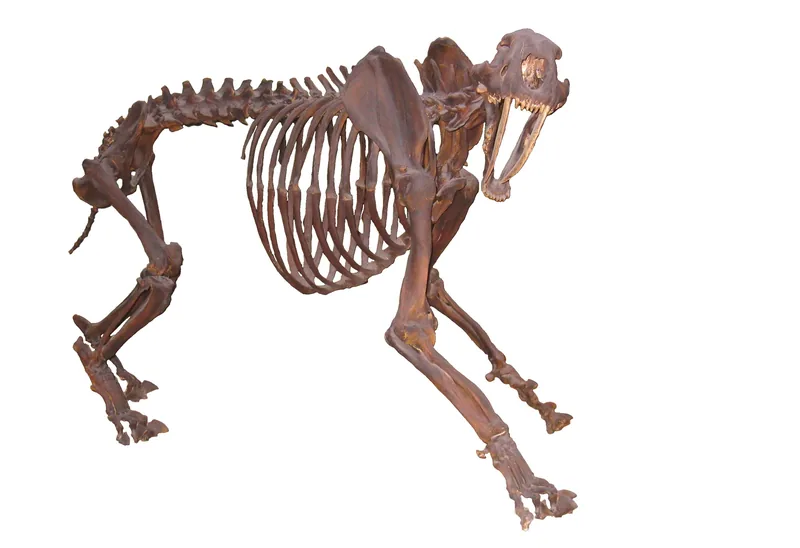
“Smilodon fatalis was the second largest extinct cat at Tule Springs, reaching over 3 feet tall at the shoulder, with a body length of nearly 6 feet, and weighing between 350-620 lbs.” The largest, on the same official page, was the American lion, Panthera atrox: “the largest extinct cat to live in North America during the Pleistocene,” estimated at “between 5-8 feet in length and nearly 4 feet in height at the shoulder,” and “25% larger than today’s African lion.” Those official sizes stay with the American lion, and are not borrowed for Smilodon.[source]
The saber-toothed cat “is a recent addition to the fauna of Tule Springs Fossil Beds and was the first record of Smilodon in southern Nevada.” “The first described fossils of Smilodon from Tule Springs are an upper and lower arm bones (humerus and radius) and sacral vertebrae collected in 2003 and described in detail in 2016.” “These fossils raised questions about the habitat preferences of Smilodon, which is known to have preferred woodlands in Southern California.”[source]
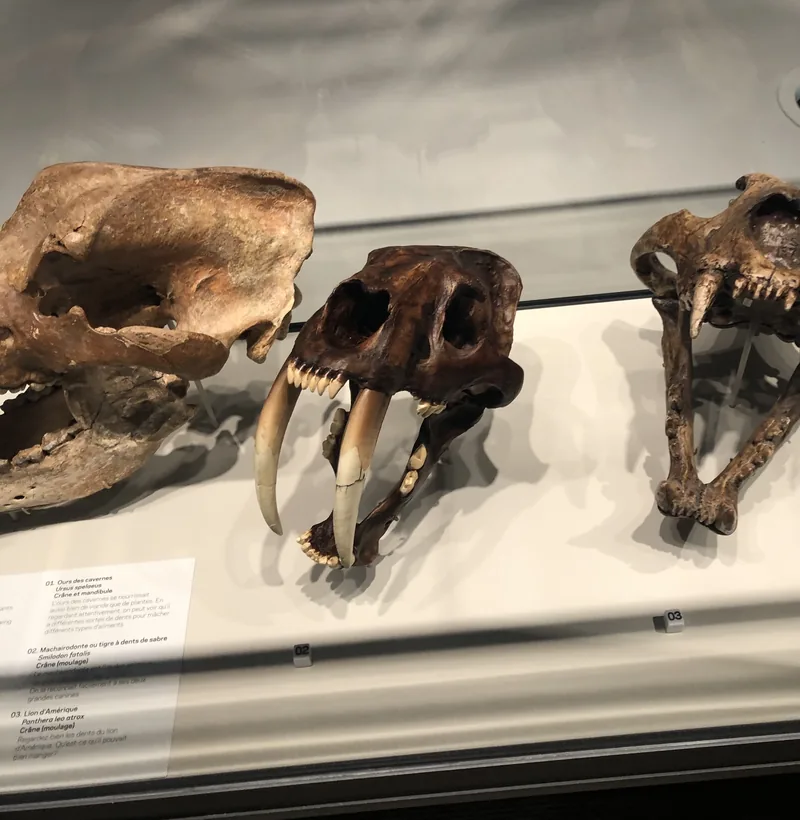
The American lion, official wording says, “was one of the first large carnivores to be identified from Tule Springs Fossil Beds.” The Tule Springs specimen “was a phalanx, or toe bone, collected from an expedition in 1919.” Joseph Leidy, who named S. fatalis from a Texas cave in 1869, also “identified and named” the first American lion fossils. The scientific name Panthera atrox “means “fearsome panther” in Latin.” Official wording dates the American lion from about 340,000 years ago until it “disappeared from the fossil record approximately 11,000 years ago” — a range not blended with Smilodon’s official endings.[source]
Recent genetic work quoted by the NPS “suggests that the American lion is a distinct species with a close relationship to the extinct Eurasian cave lion,” rather than a close relative of living tigers, a large jaguar, or a subspecies of the African lion, as had been historically considered.[source]
Enjoyed this sabre-tooth desk?
No pop-ups. No intrusive advertising. Just interesting stuff. A little support helps the next fossils.im site get built.